
Watch Movements
Understanding the Engine and Craftsmanship Behind Every Luxury Timepiece
Watch Education
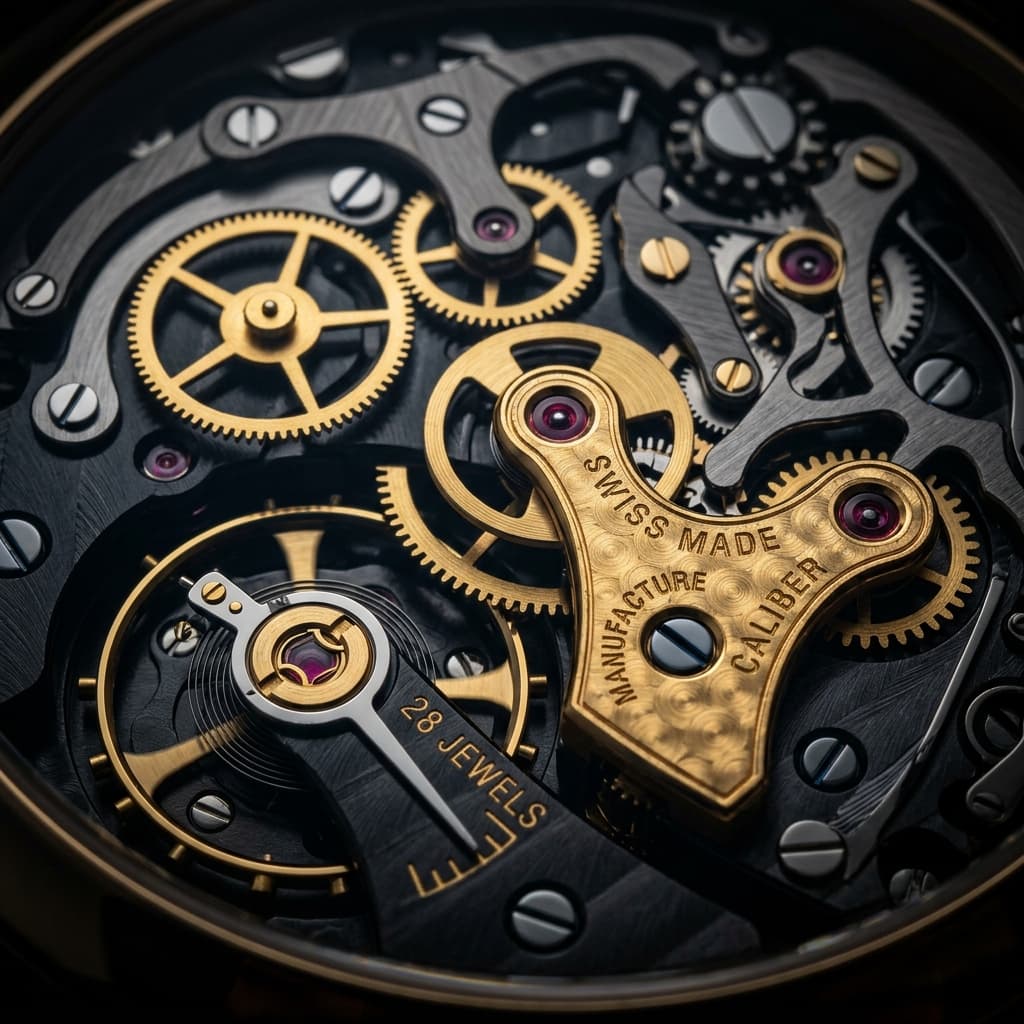
When people admire a luxury watch, they usually notice the shine, the stones, or the gold finish. But the real heart of the watch is inside.
That heart is called the watch movement.
The movement controls how the watch keeps time. It affects accuracy, prestige, maintenance, and overall value. Whether you are wearing a bold iced out moissanite watch in Los Angeles or a gold statement timepiece in Dubai, understanding watch movements helps you choose wisely.
In this guide, we explain watch movements in simple English, so you can understand what makes a watch truly premium.
What Is a Watch Movement?
A watch movement (also known as a "caliber") is the internal mechanism that powers the watch and moves the hands. Think of it as the engine of a car. Without it, the watch is just a pretty shell.
Beyond showing time, the movement also powers additional complications, such as date indicators, chronographs (stopwatches), or moon phase displays.
- Hours & Minutes
- Sweeping/Ticking Seconds
- Calendar & Date
- Chrono features
The Three Types of Movements
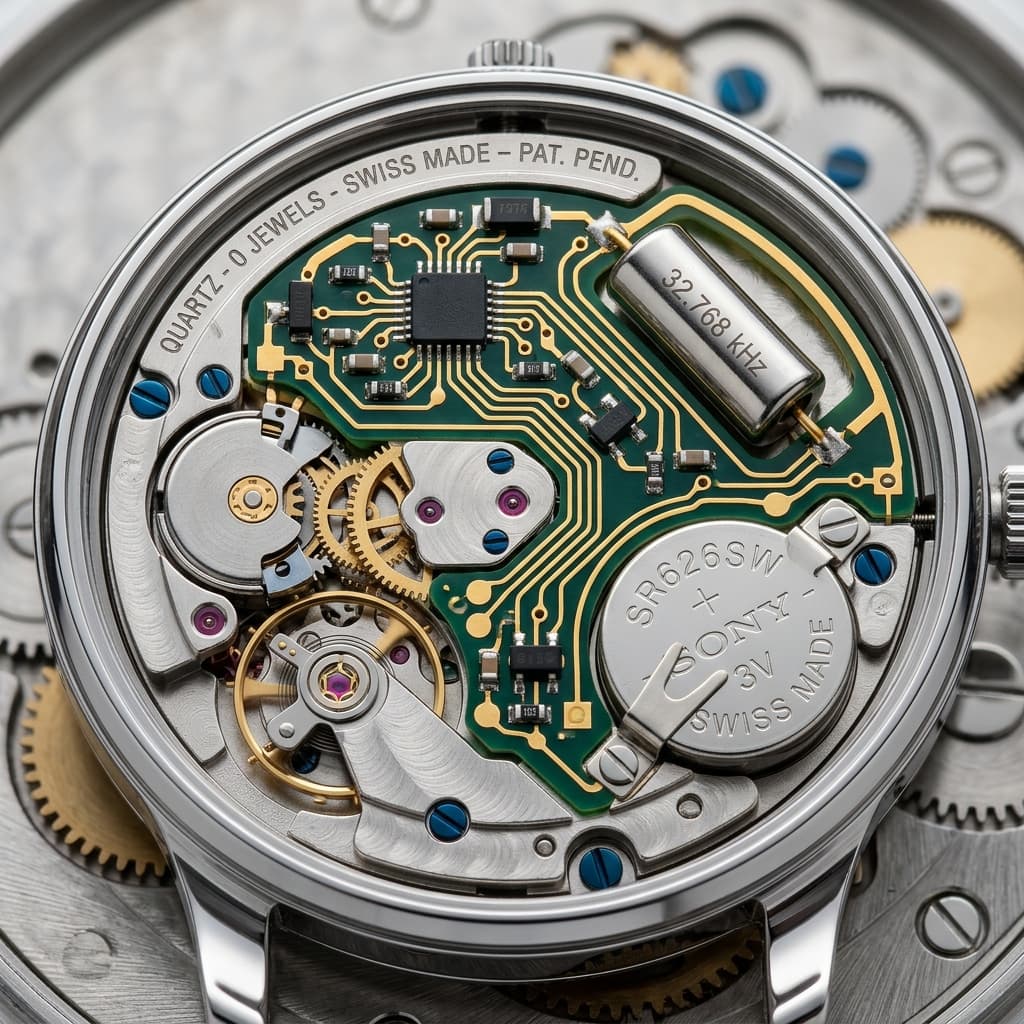
Quartz Movement
A quartz movement runs on a battery. When the battery sends electricity through a small quartz crystal, it vibrates and keeps very accurate time.
- •Extremely accurate (only loses a few seconds per month)
- •Low maintenance (only requires battery replacement)
- •Affordable and durable
- •Lightweight construction
- -Replace battery every 1–2 years
- -Keep away from moisture and strong magnetic fields
Quartz is ideal if you want simplicity, reliability, and precision without manual winding.
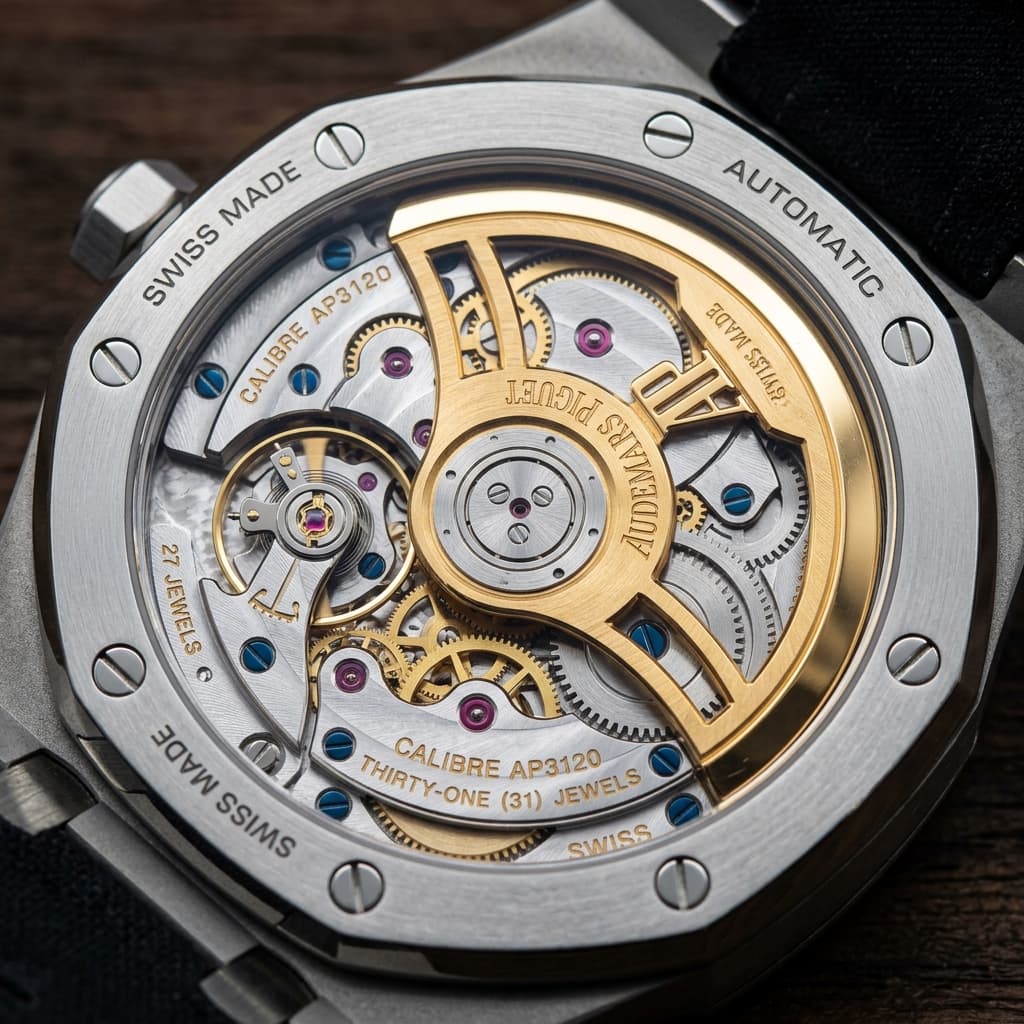
Automatic Movement
An automatic movement is also called a self-winding movement. It works using your wrist motion. Inside the watch, a small rotor spins when you move your arm. That motion winds the mainspring, which powers the watch.
- •No battery needed (powered by natural movements)
- •Traditional watchmaking craftsmanship
- •Smooth sweeping second hand (highly satisfying to watch)
- •Higher prestige and prestige value
- -Wear regularly or use a watch winder when stored
- -Service every 3–5 years for cleaning and oiling
Automatic movements combine history, function, and status.
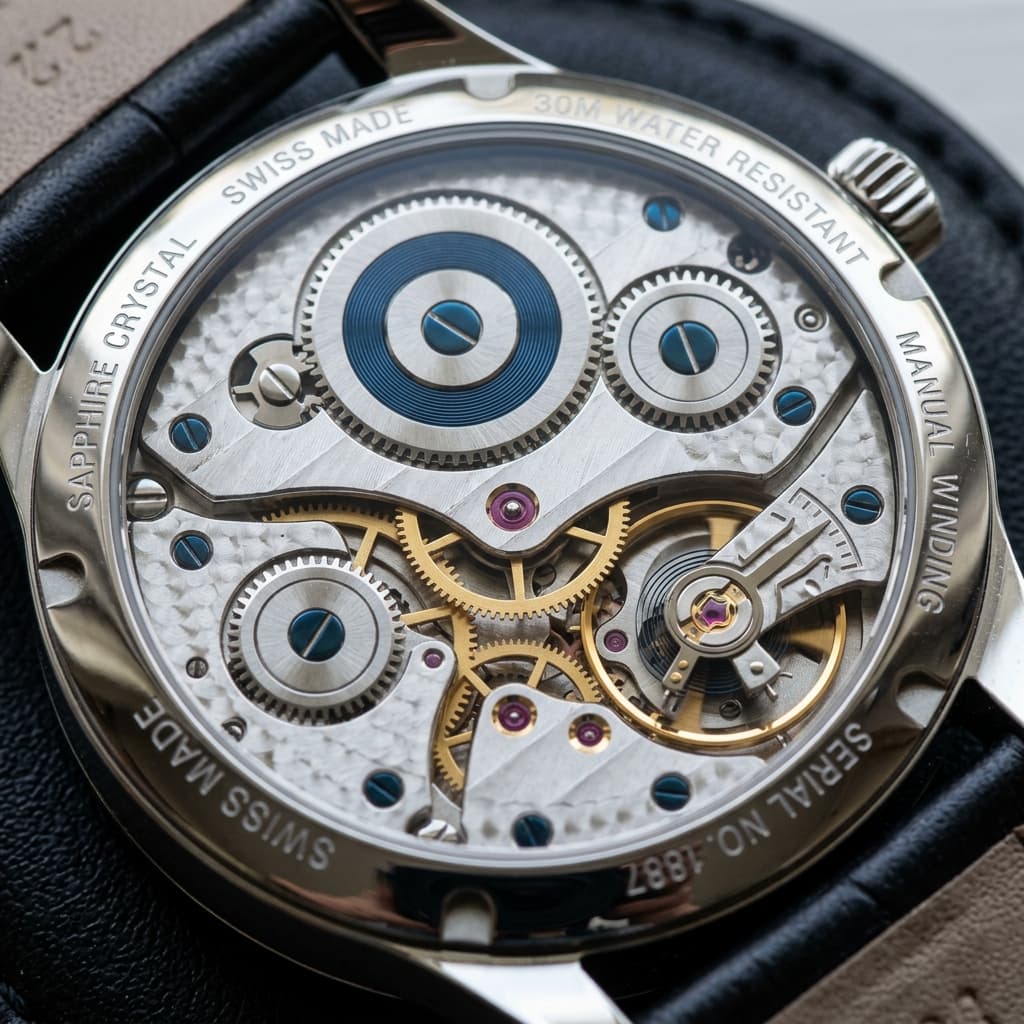
Mechanical (Manual Wind) Movement
A mechanical movement is hand-wound. Unlike automatic watches, there is no rotor to wind the watch. You must turn the crown manually to tension the mainspring and power the watch.
- •Pure traditional watchmaking heritage
- •No battery required
- •Intricate craftsmanship visible through case backs
- •Appreciated deeply by collectors
- -Wind daily (usually until you feel gentle resistance)
- -Service every 3–5 years to maintain moving parts
Manual wind movements offer the ultimate hands-on connection to classic watchmaking.
Side-by-Side Comparison
| Movement | Power Source | Accuracy | Maintenance | Prestige Level |
|---|---|---|---|---|
| Quartz | Battery | Very High | Low | Modern practical |
| Automatic | Wrist motion | High | Medium | High luxury |
| Mechanical | Hand-wound | High | Medium to High | Collector prestige |
How Movement Affects Price
Automatic and manual mechanical watches are generally more expensive because they contain hundreds of tiny, hand-assembled components.
Quartz watches are simpler to mass-produce and cost less, though a gold case or moissanite setting can still make a quartz watch highly valuable.
Smooth Sweep vs. Ticking
You can quickly identify the movement type by looking closely at the second hand:
- Quartz: The second hand jumps or "ticks" once per second.
- Automatic/Mechanical: The second hand sweeps smoothly (ticking 5-10 times per second).